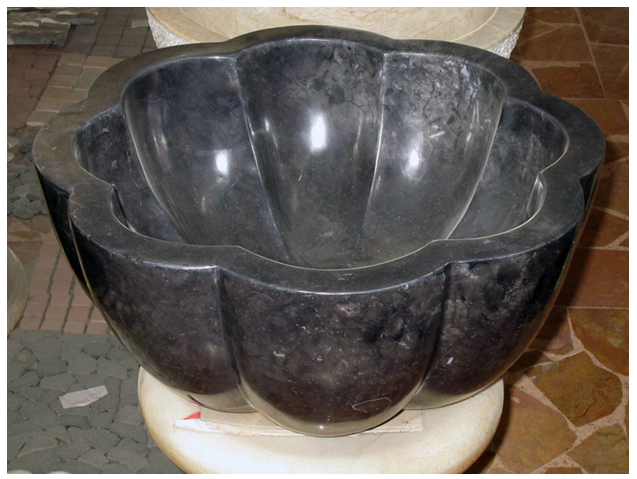
Natural stone belongs to the vast family of building, construction, finishing and furnishing materials. It is perhaps the only building and furnishing material that can be used in any context: from large monumental works to the finest design details. Natural stone represents a concrete and up-to-date answer that fits perfectly into the most modern projects, anywhere, indoors or outdoors, bringing with it values of durability, living comfort and authenticity.

Natural stone offers a unique combination of aesthetics, durability, and environmental sustainability:
- Its longevity provides cost advantages over time.
- Offers great design flexibility—from rustic styles to contemporary lines.
- Environmentally friendly due to its recyclable and reusable nature.
- Easy to maintain: regular cleaning and surface sealing every 1–2 years are sufficient.

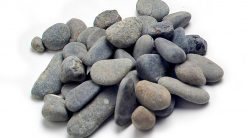
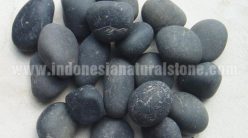
Pebbles are small, naturally rounded stones that range from 4 to 64 millimeters in diameter. Their smooth surface comes from natural weathering and erosion. Because of their rounded shape and appealing texture, pebble stones are often used in landscaping for garden paths, decorative features, and ground cover. They are also popular for use in aquariums and as a drainage layer.
Pebbles come in various colors and types. River pebbles are known for their smooth, polished appearance, while beach pebbles can show a variety of colors and sizes.
Gravel consists of loose stones that range in size from 2 to 75 millimeters in diameter. Unlike pebbles, gravel can be either rounded or angular, depending on its source and processing. It is versatile and commonly used in construction and landscaping. Gravel stones serve as a base material for driveways and road construction, as well as in drainage systems and for decorative purposes.
There are different types of gravel, including crushed gravel, which has angular particles that are ideal for compaction, and pea gravel, which is smooth and rounded and often used for paths and decorative applications.
–sh